

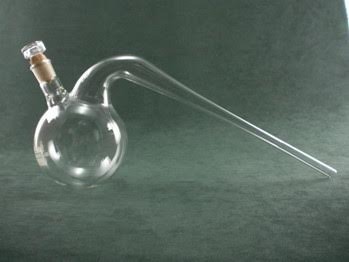
Retort glass refers to a type of glassware commonly used in laboratory settings for various scientific processes, particularly in chemistry and biology.
Retort glassware is designed to withstand high temperatures and chemical reactions, making it suitable for heating substances, performing distillations, and carrying out other laboratory procedures. It is typically made of borosilicate glass, known for its excellent thermal resistance and chemical durability.
There are different types of retort glassware, including:
1. Retort flask: Also known as a round-bottom flask, it has a spherical or pear-shaped bottom and a long neck. It is commonly used for heating and holding liquids during distillations or reflux reactions.
2. Retort stand: A metal stand with a rod and clamps used to support and hold various laboratory equipment, including retort flasks, burettes, and condensers.
3. Retort clamp: A clamp designed to securely hold a retort flask or other glassware onto a retort stand.
4. Retort ring: A metal ring with a rod used to support and hold a retort clamp and retort flask in place on a retort stand.
Retort glassware is essential in scientific research, educational laboratories, and industrial applications. Its robust construction and resistance to high temperatures and chemicals make it a reliable choice for a wide range of laboratory procedures involving heating, distillation, and chemical reactions.
Reviews
There are no reviews yet.